
RU-RU
Связаться с нами A stainless steel oil removal filter mesh is a finished grease-and-odour filter for range hoods, built by Oltaven with a 304 stainless steel outer frame and front cover, aluminium foil…
FILTER MEDIA / ROLLS · SHEETS · DIE-CUT
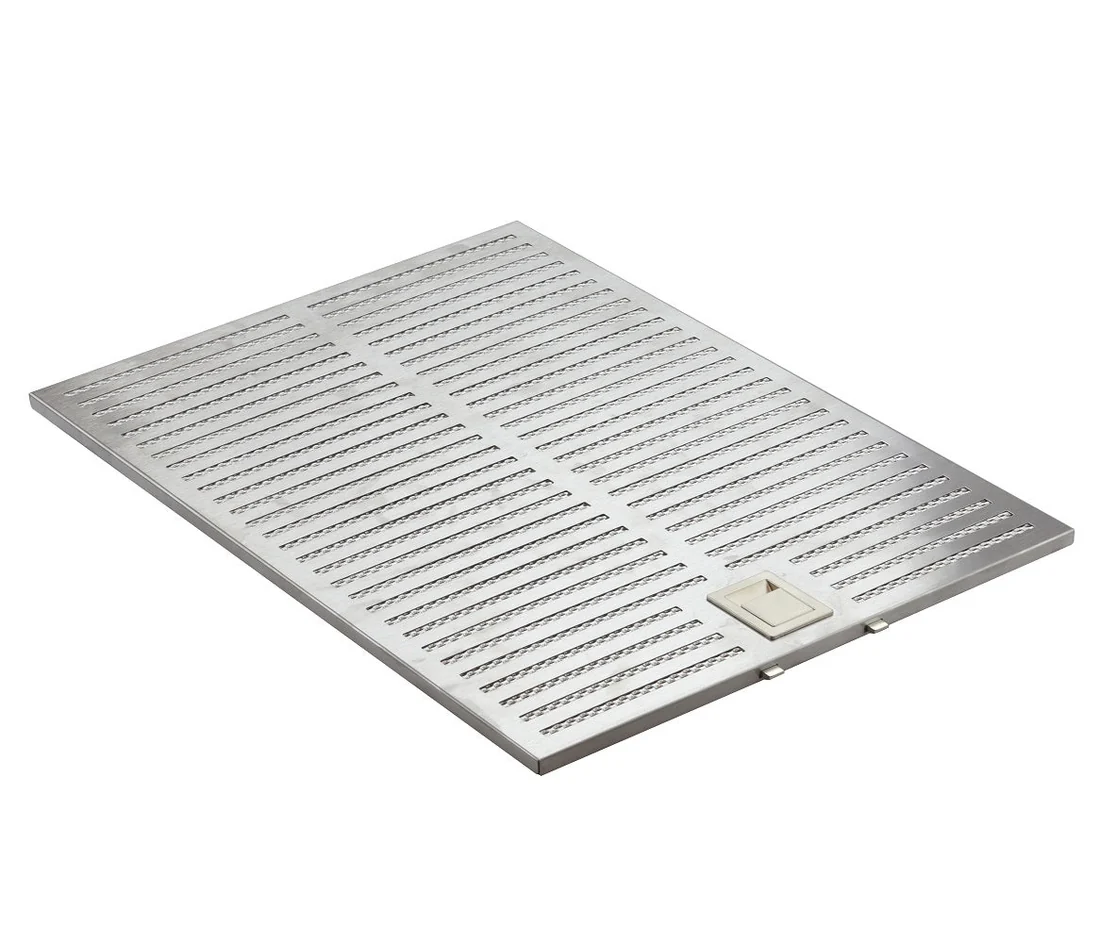
A stainless steel oil removal filter mesh is a finished grease-and-odour filter for range hoods, built by Oltaven with a 304 stainless steel outer frame and front cover, aluminium foil micro-perforated mesh, flame-retardant polyester fibre and an activated carbon layer. It captures heavy grease and adsorbs cooking odours in recirculating range hoods. It suits open-plan kitchens, commercial kitchen exhaust systems and European-style hoods, and the same construction is offered as a custom build for appliance makers.
The media inside a range hood filter is only part of the story. A roll of aluminium foil mesh or activated carbon does not separate grease at a defined efficiency, and it does not hold a shape in a dishwasher-warm, oil-laden hood. What turns media into a product is the way it is formed and assembled: how the layer is pleated or shaped, how it sits in the frame, and how it is sealed so air cannot bypass the filter. Oltaven sells finished filters, not media, and the difference shows up in the numbers a hood manufacturer cares about: capture efficiency, pressure resistance and odour-holding capacity.
Think of the filter as a stack. The front stainless steel cover takes the first contact with oil-laden air. Behind it, the aluminium foil micro-perforated mesh spreads the airflow and traps larger droplets. The flame-retardant polyester fibre layer works as a coalescing stage, holding fine oil mist until it drains. The activated carbon layer then acts on odour molecules such as cooking smoke and spicy aromas. Each layer has a job, and the forming process is what lets all four work without choking the hood's airflow.
Three forming decisions largely decide how a finished filter behaves.
A flat sheet of mesh offers only the area you can see. Pleating or shaping adds effective area, which lets the filter hold more grease before it loads up and keeps air speed through each channel lower. Lower face velocity means a gentler pressure rise, which matters in recirculating hoods where the fan has limited pressure to spare. Forming also keeps the layers from compressing together, so the carbon layer stays open to the air it needs to contact.
The frame is not just a handle. A 304 stainless steel outer frame or a high-strength aluminium profile holds the layers flat and square so they seat in the hood without gaps. If air slips around the edge of the filter, it carries grease and odour straight past the media, and measured efficiency falls even though the media itself is unchanged. Frame choice, optional clips and a handle option are therefore part of the performance specification, not an afterthought.
Sealing the layers to the frame keeps the stack in the order it was designed. Layer order matters: if the coalescing fibre and carbon are swapped or unevenly compressed, oil reaches the carbon early and reduces its odour capacity, while resistance can rise unevenly across the face. Consistent forming and sealing are what make one production batch behave like the last, which is why Oltaven builds these filters in a plant with IQC, IPQC and OQC checks through the process.
Fire safety is also a forming outcome. This filter conforms to UL 900 Class 1 / Class 2 fire safety testing, which reflects the choice of flame-retardant polyester fibre and the way the finished assembly behaves.
| Item | Detail |
|---|---|
| Product name | European-style range hood filter, activated carbon odour-removal version |
| Core materials | 304 stainless steel outer frame and front cover; aluminium foil micro-perforated mesh; flame-retardant polyester fibre; quality granular or powdered activated carbon layer |
| Main function | High-efficiency separation and capture of heavy grease and oil; strong adsorption of cooking odours such as smoke and spicy aromas |
| Flame-retardant standard | Conforms to UL 900 Class 1 / Class 2 fire safety testing |
| Typical use | Recirculating range hoods in open-plan kitchens; commercial kitchen exhaust purification systems; European-style top-draw and side-draw range hoods |
| Frame options | High-strength aluminium profile or stainless steel frame; various clips and handles available as options |
| Customisation and quality | OEM/ODM flexible manufacturing; IATF 16949 and ISO 9001 management systems; national CNAS testing centre for batch quality |
Oltaven is an OEM/ODM filter manufacturer based in Zhongshan, Guangdong, China. We have more than 20 years of filter research and manufacturing experience and have developed over 1,000 filtration solutions, so a custom range hood filter is a familiar project rather than a new one.
Production runs in a 50,000 m² plant that includes six cleanrooms totalling 20,000 m². Our in-house laboratory is accredited by CNAS and can issue test reports covering filtration efficiency, dust-holding capacity and resistance. The plant holds IATF 16949, awarded in 2024, together with ISO 9001, ISO 14001 and ISO 45001 system certifications. Products comply with REACH and RoHS requirements, and compliance documents can be supplied. We have exported to Europe, the United States, Japan and Korea for more than 20 years.
To quote accurately we need your device or hood model, the filter size or a drawing, the airflow of the hood, the operating conditions (grease load, cooking style, indoor recirculation or exhaust) and the quantity you expect. Send these through our contact page and our team will respond with a specification proposal. We welcome long-term OEM/ODM partnerships with appliance brands and commercial kitchen suppliers.
In a finished filter, resistance is decided mainly by how the layers are formed. Pleating adds surface area and lowers face velocity, while a compressed or uneven stack raises resistance at the same size. Frame fit also matters: air that bypasses the media around the edge changes the pressure behaviour you measure.
It starts with your hood model, filter size or drawing, airflow, operating conditions and expected quantity. Oltaven then proposes a layer and frame configuration, produces a sample for fit and performance checks, and confirms specification, MOQ and lead time in writing before production.
Yes. Behind the stainless steel cover and aluminium foil mesh, a coalescing polyester fibre layer holds grease, and the granular or powdered activated carbon layer adsorbs odour molecules such as cooking smoke and spicy aromas. The filter is intended for recirculating hoods where air returns to the kitchen.
The finished filter conforms to UL 900 Class 1 / Class 2 fire safety testing. That reflects the flame-retardant polyester fibre and the way the assembly is built, which is relevant in hoods where grease and heat are present.
Yes. Oltaven offers 100% flexible customisation of size and structure, with a 304 stainless steel or high-strength aluminium frame and optional clips and handles. Logo and packaging can also be customised as part of an OEM/ODM order.
MOQ and lead time depend on the specific customisation, frame material and quantity, so they are confirmed in the written quotation after the specification is agreed. Please include your expected volume when you inquire so the proposal can reflect it.
Yes. Share the hood model, size or drawing, airflow, operating conditions and quantity through the contact page, and the team will prepare a sample and a quotation for the agreed build.
Replacement depends on grease load and cooking style, so it is set per application rather than as a fixed interval. In heavy commercial use, check the filter more often and replace it when grease build-up or returning odours indicate the carbon and fibre layers are loaded.