
RU-RU
Связаться с нами This is a European-style range hood filter made by Oltaven that combines an aluminium foil micro-perforated mesh, flame-retardant polyester fibre and an activated carbon layer in one…
FILTER MEDIA / ROLLS · SHEETS · DIE-CUT
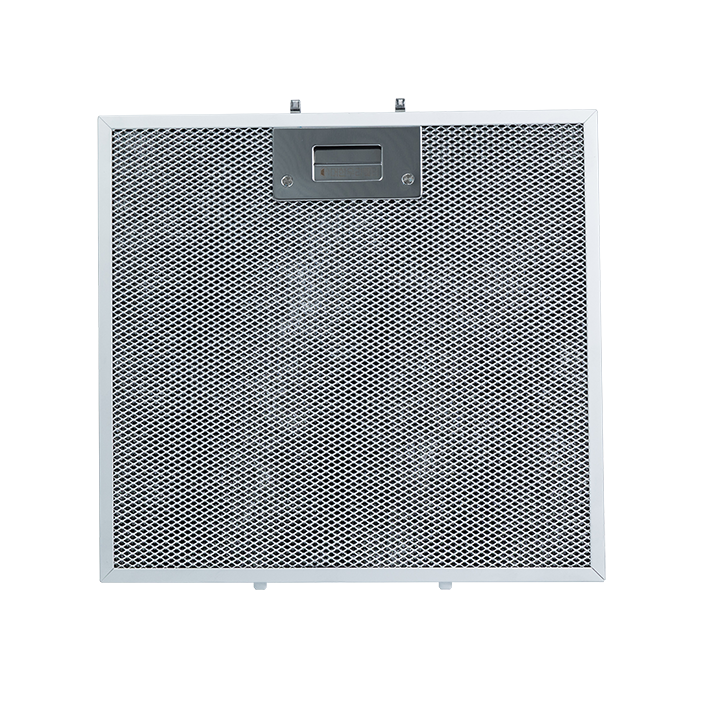
This is a European-style range hood filter made by Oltaven that combines an aluminium foil micro-perforated mesh, flame-retardant polyester fibre and an activated carbon layer in one finished part. It captures heavy grease and adsorbs cooking odours for recirculating (ductless) cooker hoods, open-plan kitchens and commercial kitchen exhaust cleaning systems. It is built for appliance brands, OEM/ODM buyers and wholesalers who need a finished filter, not just raw media.
A filter is often described by its media, but the media alone does not decide what the user experiences. The same aluminium foil mesh can end up as a low-resistance grease screen or a dense odour filter depending on how it is pleated, framed and sealed. Oltaven sells the finished filter, so the forming steps are part of the product.
In this range hood filter, the aluminium foil micro-perforated mesh handles the first job: separating and capturing heavy oil and grease. The flame-retardant polyester fibre supports the structure and helps hold the activated carbon layer in place. The activated carbon, in granular or powder form, adsorbs cooking odours such as oily smoke smells and spicy notes. Each layer has a role, and the order in which they are combined affects both grease capture and odour control.
Framing is the next decision. The outer frame can be high-strength aluminium alloy profile or a stainless steel frame, and optional clips and handles can be added. The frame keeps the layered media flat, holds the part rigid during handling and cleaning, and defines how the filter sits in the hood. Sealing and edge finishing then close the media stack so air passes through the filter rather than around it.
Three outcomes matter to a cooker hood designer: efficiency, resistance and capacity. Efficiency is how much grease and odour the filter removes. Resistance is the pressure drop the fan must overcome. Capacity is how much contaminant the filter holds before performance drops. Media choice sets the starting point, but pleating, framing and sealing decide the finished result.
Pleating and layer build change the effective surface area and the path the air takes. A denser carbon layer can improve odour adsorption while adding resistance. A more open aluminium mesh can lower resistance while shifting the balance toward grease capture. The frame and edge seal prevent bypass, so the air that is counted actually passes through the media. For a recirculating hood, this balance is what the user hears as fan noise and smells as cooking odour returning to the kitchen.
Because Oltaven controls the forming steps, the specification can be tuned to the appliance. Buyers can discuss layer build, mesh openness, carbon loading and frame type together, instead of choosing a media roll and hoping the finished part behaves the same way.
This filter is designed for recirculating cooker hoods, where air is cleaned and returned to the kitchen rather than ducted outside. That makes odour adsorption as important as grease capture. It suits open-plan kitchens where cooking smells would otherwise spread into living areas, and it fits European-style top-draft and side-draft hoods.
Commercial kitchen exhaust cleaning systems can also use the same finished filter concept, where grease and odour control are needed in one replaceable part. Appliance brands may specify the filter as a service part or as original equipment. The construction is also relevant to buyers who need a flame-retardant filter: the product complies with UL 900 Class 1 / Class 2 fire safety test certification.
| Item | Detail |
|---|---|
| Product name | European Range Hood Filter (Activated Carbon Odour-Control Version) |
| Core materials | Aluminium foil micro-perforated mesh + flame-retardant polyester fibre + quality granular or powder activated carbon layer |
| Main function | Efficient separation and capture of heavy oil and grease; strong adsorption of cooking odours such as oily smoke smells and spicy notes |
| Flame-retardant certification standard | Complies with UL 900 Class 1 / Class 2 fire safety test certification |
| Suitable scenarios | Recirculating cooker hoods in open-plan kitchens, commercial kitchen exhaust cleaning systems, European-style top-draft and side-draft range hoods |
| Outer frame options | High-strength aluminium alloy profile, stainless steel frame (optional clips and handles available) |
| Customisation and capacity | OEM/ODM flexible manufacturing; company holds IATF 16949 / ISO 9001 systems; national CNAS testing centre supports batch quality |
Oltaven works with appliance brands as an OEM/ODM partner and has developed more than 1,000 filtration solutions over 20+ years of research and manufacturing experience. That experience is applied to finished filters, including the forming, framing and sealing steps described above.
The production base covers a 50,000 m² plant, including six cleanrooms with a combined area of 20,000 m². A self-built laboratory is CNAS-accredited and can issue test reports on filtration efficiency, dust holding capacity and resistance. The company has held ISO 9001, ISO 14001 and ISO 45001 system certifications, and obtained IATF 16949 automotive quality management system certification in 2024.
Products meet REACH and RoHS environmental requirements, and compliance documents can be provided. Quality control runs through IQC, IPQC and OQC. The address is Zhongshan, Guangdong, China.
If you are developing a recirculating hood or updating a service part, Oltaven can work from your drawing, sample or performance target. Please tell us the device model, size or drawing, airflow, operating conditions and quantity. To begin, contact our team and we will respond with the next steps for sampling and quotation.
Same outer size does not mean same internal build. The layer count, mesh openness, carbon loading and how tightly the media is pleated all change the air path. The frame and edge seal also decide whether air passes through the media or bypasses it. Oltaven tunes these forming choices with the buyer so the finished filter matches the hood's fan and airflow target.
It starts with the device or vehicle model, a size drawing or sample, and the airflow or water flow requirement. Oltaven then reviews operating conditions, target efficiency and frame options, and proposes a layer build and forming approach. Samples follow for fit and performance checks before batch production.
Yes. Oltaven supports OEM/ODM customisation of dimensions, structure, filter media grade, frame material, logo and packaging. The outer frame can be high-strength aluminium alloy profile or stainless steel, with optional clips and handles. The engineering team can help optimise the structure and confirm it with a sample.
This range hood filter complies with UL 900 Class 1 / Class 2 fire safety test certification. The core build combines aluminium foil micro-perforated mesh, flame-retardant polyester fibre and an activated carbon layer. Buyers should confirm the exact class required for their market when specifying the part.
Standard models typically start at 500–1,000 pieces, while customised models are generally 2,000–3,000 pieces, negotiable based on the order. Samples are usually available within 3–7 days, and batch lead time is typically 25–35 days depending on quantity and customisation complexity.
Samples can be provided. Standard in-stock samples are free with the buyer covering courier cost; customised samples carry a sampling fee that can be deducted from a batch order. Testing the sample in the actual hood before ordering is encouraged. Send your specification to request a quotation.
Replacement depends on cooking intensity, hood airflow and the grease and odour load in the kitchen. A recirculating hood in heavy daily use will need a new filter sooner than one used occasionally. Oltaven can discuss the expected service window with buyers when the layer build and carbon loading are specified.
Oltaven's CNAS-accredited laboratory can issue reports on filtration efficiency, dust holding capacity and resistance. Products meet REACH and RoHS requirements and compliance documents can be provided. The company holds ISO 9001, ISO 14001, ISO 45001 and IATF 16949 certification, with IQC, IPQC and OQC quality control. Contact us to discuss your project.