
HU-HU
Kapcsolat This Oltaven coffee machine filter is a drop-in water purification cartridge compatible with Hamilton Beach coffee machines. It combines a coconut-shell activated carbon block with…
FILTER MEDIA / ROLLS · SHEETS · DIE-CUT
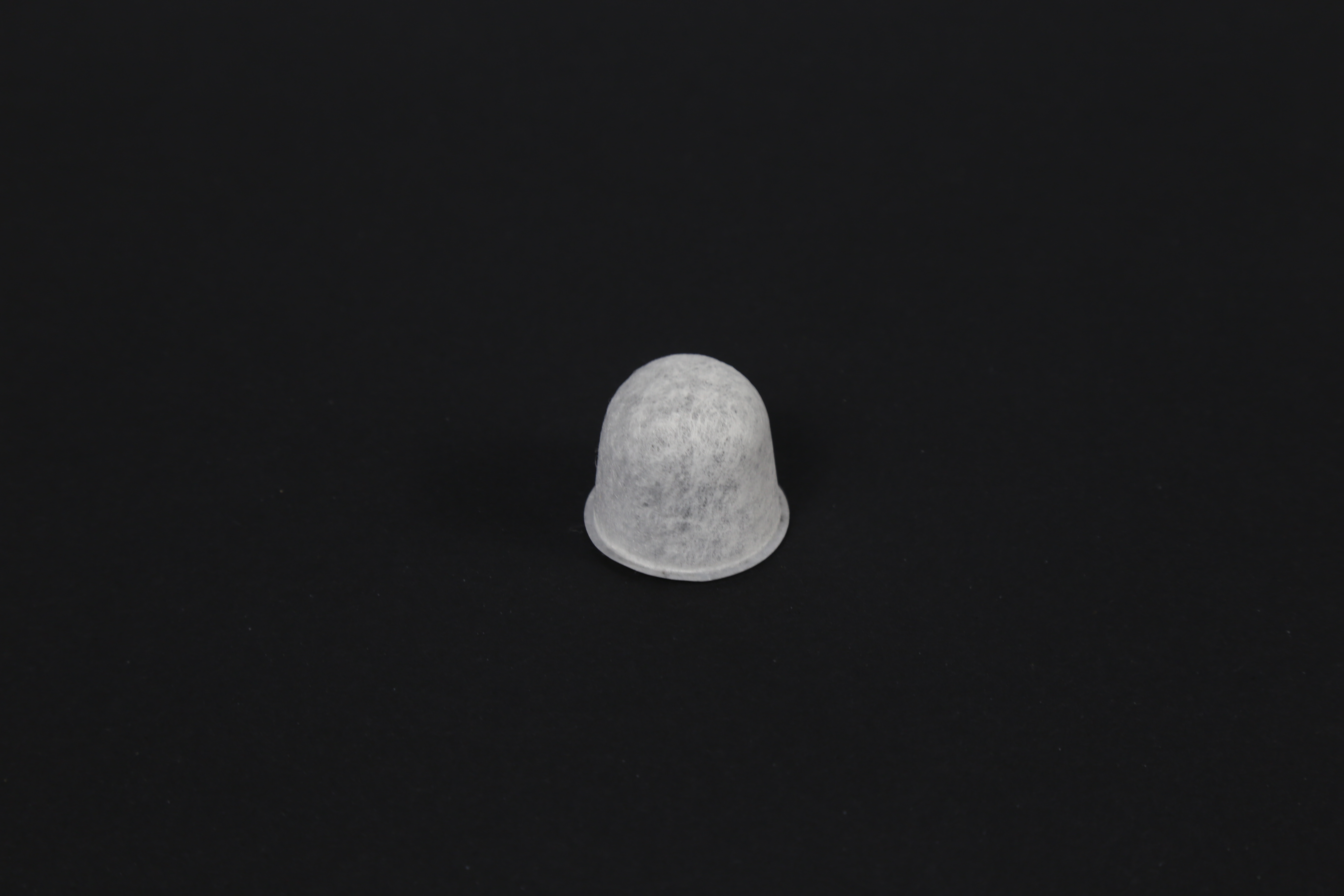
This Oltaven coffee machine filter is a drop-in water purification cartridge compatible with Hamilton Beach coffee machines. It combines a coconut-shell activated carbon block with food-grade ion exchange resin to reduce chlorine, odours, heavy metals and scale from tap water before brewing. It is designed for home and commercial coffee equipment owners, as well as OEM buyers who need a reliable finished filter rather than loose media.
The media inside a water filter sets the upper limit of what the cartridge can do. Coconut-shell activated carbon offers a dense pore structure that adsorbs chlorine, organic compounds and off-flavours, while food-grade ion exchange resin exchanges hardness minerals for sodium or hydrogen ions, reducing the calcium and magnesium that form scale in a boiler. On paper, a good media blend is the foundation of clean, consistent water.
But media alone does not make a filter. The way the carbon is formed into a block, the precision of the pleating or moulding, the fit of the end caps and the quality of the seals all determine how water actually travels through the cartridge. A loosely formed block may allow channelling, where water takes the path of least resistance and bypasses much of the media. A well-formed block forces water through the entire depth of the carbon, so contact time is even and the rated capacity is realistic. The housing and connectors must also hold pressure without leaking, because a filter that drips or cracks fails regardless of how good its media is.
At Oltaven, we sell finished filters. That means we control the full chain — media selection, forming, assembly and testing — and we can explain exactly how each choice affects the efficiency, resistance and capacity of the product you receive.
Three performance figures matter most to coffee machine owners: how much chlorine and scale the filter removes (efficiency), how much pressure it costs the machine (resistance), and how long it lasts (capacity). Each is decided by how the finished filter is built.
Efficiency depends on the carbon's pore structure, the amount of resin and the contact time. A denser carbon block with a uniform wall thickness gives water more time in contact with the media, which improves chlorine reduction and scale control. Our filter uses a high-quality coconut-shell activated carbon and food-grade ion exchange resin, formed to fine micro-pore specification so that sediment, rust and other large particles are also intercepted.
Resistance is the pressure drop across the cartridge. It rises when the media is too tightly packed, when the flow path is narrow, or when the filter is near the end of its life. Coffee machines rely on a stable inlet pressure to deliver consistent extraction, so a well-designed filter balances media density against flow. This cartridge operates at 20–120 psi (approximately 1.4–8.3 bar), a range that suits most domestic and commercial coffee systems.
Capacity is the volume of water the filter can treat before efficiency drops below a useful level. It is set by the mass and activity of the media and by the water quality. For this filter, the effective life is about 250 litres or 2–3 months, whichever comes first, depending on local water hardness and usage frequency. In hard-water areas, the resin works harder and capacity may be reached sooner, which is why we recommend changing on a schedule rather than waiting for a noticeable change in taste.
Forming and sealing tie all three together. A precise housing keeps the media in place, prevents bypass and protects the carbon from handling damage. Our production follows controlled cleanroom and quality procedures, so the filter you install matches the sample you approved.
This filter is used in automatic coffee machines, semi-automatic espresso machines and commercial coffee equipment where scale control protects the boiler and keeps flavour clean. It is also available as an OEM water filter for brands that want a ready-to-label cartridge for their own machines. Because it is rated for cold water only (2°C–38°C), it suits the inlet side of coffee systems rather than hot-water lines.
Beyond coffee, the same media and forming approach is used in drinking-water filters, ice machines and other small-format water appliances. If your device needs a different connector, length or media blend, we can develop a finished filter around your drawing.
| Item | Detail |
|---|---|
| Filtration media | High-quality coconut-shell activated carbon with food-grade ion exchange resin |
| Micron rating | Fine micro-pore interception; captures sediment, rust and other large particles |
| Effective filter life | Approximately 250 litres or 2–3 months, depending on local water quality and usage |
| Operating pressure | 20–120 psi (approximately 1.4–8.3 bar) |
| Operating temperature | 2°C–38°C (cold water filtration only) |
| Applications | Automatic coffee machines, semi-automatic espresso machines, commercial coffee machine water softening, OEM water filter customisation |
| Quality and certification systems | Production follows ISO 9001/14001, IATF 16949, medical supplies GMP standard, and CNAS national testing certification |
Oltaven is built for OEM and ODM work. We have developed more than 1,000 filtration solutions, so we can often match an existing device or adapt a proven design rather than starting from zero. Our plant covers 50,000 m², including six cleanrooms totalling 20,000 m², where filter assembly and handling take place under controlled conditions.
Our in-house laboratory is CNAS-accredited and can issue test reports for filtration efficiency, dust-holding capacity and resistance, giving you documented performance data for your own market. The factory holds IATF 16949 (obtained in 2024), ISO 9001, ISO 14001 and ISO 45001, and our products meet REACH and RoHS requirements with compliance documents available. With more than 20 years of filtration experience and two decades of exports to Europe, the United States, Japan and Korea, we understand the documentation and consistency that brand owners need.
To quote accurately, we need a few details: the device or vehicle model, the filter size or a drawing, the required airflow or water flow, the operating conditions (pressure, temperature, water quality) and your target quantity. Send these through our contact page and our team will respond with a proposal. We welcome long-term OEM partnerships and are glad to discuss how a finished Oltaven filter can fit your product line.
Resistance comes from how the media is formed and how water is forced through it. A denser carbon block or a narrower flow path increases pressure drop, while a well-formed block with uniform wall thickness keeps resistance predictable. This Oltaven filter is rated for 20–120 psi, so it works within the pressure range of most coffee machines.
It starts with your requirement: device model, size or drawing, flow rate and operating conditions. We review these against our existing platforms, then propose media, housing and connector options with a quotation. After approval, we build samples for your testing before production.
The effective life is about 250 litres or 2–3 months, whichever comes first, depending on local water quality and usage. In hard-water areas, scale capacity may be reached sooner, so we recommend replacing on a fixed schedule rather than waiting for a taste change.
Yes. We offer OEM/ODM customisation of dimensions, connector type, media blend, housing colour, logo and packaging. Our team has developed more than 1,000 filtration solutions, so we can often adapt an existing design to your device.
Standard samples are available for testing; custom samples typically take 10–15 working days after specification approval. We quote based on your quantity, customisation level and packaging requirements, and we can supply CNAS test reports to support your evaluation.
For standard compatible models, the MOQ is 5,000 pieces, with stock or small-batch orders usually delivered in 15–20 days. OEM customised models are recommended at 10,000 pieces or more, with a production cycle of about 25–30 days including tooling and packaging development.
Production runs in six cleanrooms totalling 20,000 m², with IQC, IPQC and OQC checks at each stage. Our CNAS-accredited lab tests flow, TDS reduction, airtightness and carbon fines on each batch, and retains samples for traceability.
We provide selection advice, application design, CNAS test reports, and compliance documents for REACH and RoHS. With more than 20 years of filtration experience and exports to Europe, the US, Japan and Korea, we support brand owners through the full product lifecycle. Contact us to discuss your next project.