
HI-IN
संपर्क करें Oltaven's ULPA Grade Dust Filter Box is a high-efficiency filtration component designed for ventilators, anesthesia machines, and industrial respirators. It captures PM0.3 particles with an…
FILTER MEDIA / ROLLS · SHEETS · DIE-CUT
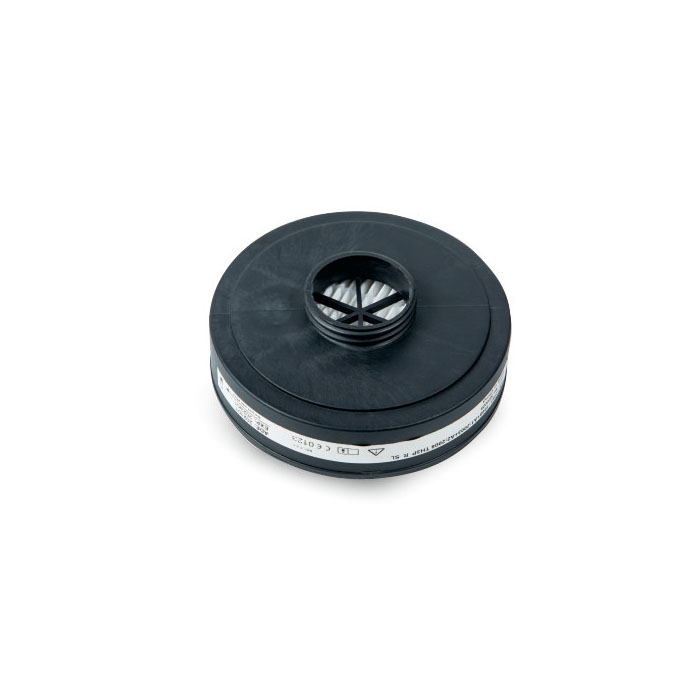
Oltaven's ULPA Grade Dust Filter Box is a high-efficiency filtration component designed for ventilators, anesthesia machines, and industrial respirators. It captures PM0.3 particles with an efficiency of ≥99.99% and combines particulate removal with VOC adsorption, making it suitable for clinical and industrial users who require reliable air purification. The filter is manufactured under GMP for medical products and can be fully customized to fit specific device models.
The performance of a finished filter is determined not only by the filter media but also by how that media is pleated, framed, and sealed. At Oltaven, we sell finished filters, not just media. Our ULPA Grade Dust Filter Box uses a composite of high-precision PTFE membrane, glass fiber, and activated carbon. The PTFE membrane provides ultra-fine particle capture, while the activated carbon layer adsorbs VOCs and other gaseous contaminants. The media is pleated to maximize surface area within a compact housing, and the pleat geometry directly influences airflow resistance and dust holding capacity. The pleated media is then encased in a housing—typically made of medical-grade ABS or PC—and sealed with medical silicone through ultrasonic welding to ensure leak-free operation. This combination of materials and construction yields a filter that delivers consistent efficiency and low resistance in real-world applications.
Several factors interact to determine the final performance of a filter. First, the choice of media sets the baseline efficiency and resistance. The PTFE membrane in this filter is engineered to capture ≥99.999% of particles at the most penetrating particle size (MPPS), which typically falls between 0.1 and 0.2 μm. The glass fiber layer adds mechanical strength and depth filtration, while the activated carbon handles gaseous pollutants. Second, the pleating process affects the effective filtration area: more pleats can increase capacity but may also raise resistance if not designed properly. Third, the housing and seal integrity are critical to prevent bypass leakage. Oltaven uses injection-molded housings with precise tolerances and ultrasonic welding to create a durable seal that maintains the filter's efficiency throughout its service life. Finally, the manufacturing environment—cleanrooms and strict quality control—ensures that no contamination is introduced during assembly.
This filter is primarily used in clinical ventilator and anesthesia machine circuits, where high-efficiency filtration protects patients and equipment. It is also suitable for industrial respirators and positive-pressure breathing apparatus, as well as high-specification fresh air purification and oxygen generation systems. The filter's ability to remove both particles and VOCs makes it versatile for environments where airborne contaminants may include both biological and chemical agents.
| Item | Detail |
|---|---|
| Product Name | ULPA Ventilator Filter / Respirator Cartridge |
| Core Filter Media | High-precision PTFE membrane / high-grade glass fiber / composite activated carbon |
| Filtration Performance | PM0.3 removal efficiency ≥99.999% |
| Available Grades | ULPA U15 and above, multiple configurations |
| Main Applications | Clinical ventilators, anesthesia circuits, industrial respirators, fresh air purification, oxygen concentrators |
| Custom Dimensions | Tooling per customer drawings; medical-grade ABS/PC housing; medical silicone ultrasonic welding seal |
| Certifications | Manufactured under GMP for medical products; CNAS testing center; IATF 16949, ISO 14001, ISO 45001 |
Oltaven specializes in OEM/ODM filtration solutions and has developed over 1,000 custom filter designs for clients worldwide. Our production facility covers 50,000 m², including six cleanrooms totaling 20,000 m², which support the manufacturing of high-purity filters. We operate a CNAS-accredited laboratory that can perform filter efficiency, dust holding capacity, and resistance tests. Our quality management system is certified to IATF 16949 (2024) and ISO 9001, ISO 14001, and ISO 45001. Products comply with REACH and RoHS regulations, and we can provide the necessary documentation for market access. With more than 20 years of experience in filtration, we serve customers in Europe, the United States, Japan, and South Korea.
To begin your custom filter project, please provide the following details: your device or vehicle model, required dimensions or a drawing, airflow or water flow specifications, operating conditions (temperature, humidity, contaminants), and estimated quantity. Our team will respond with a tailored proposal. Contact us to discuss your requirements and discover how Oltaven can support your filtration needs.
Resistance is influenced by the pleat count and depth, the type of media, and the housing design. Filters with more pleats or denser media may have higher resistance. Oltaven optimizes these factors to balance efficiency and energy use.
An OEM project starts with your specifications: device model, dimensions, airflow, and operating conditions. We then propose a design and provide samples for validation. Tooling and mass production follow after sample approval.
This filter achieves a PM0.3 removal efficiency of ≥99.99%, and in ULPA U15 configurations it can reach ≥99.9995% for particles in the 0.1–0.2 μm range.
Yes, we offer full customization, including dimensions, housing material, seal type, and filter media. Provide your device model or drawing, and we will design a filter that ensures compatibility.
Standard samples are available free of charge (1–3 pieces), with freight collected. Custom samples are charged but refundable upon bulk order. The MOQ for standard models is typically 1,000 pieces; custom orders are negotiable.
Standard models ship in 7–15 days. Custom OEM orders take 25–35 days after sample approval, excluding tooling time (15–20 days).
The recommended replacement interval is 500–1,000 hours, depending on the dust concentration in the operating environment. The filter is disposable and should not be washed.
Provide your device model, dimensions, airflow, operating conditions, and quantity through our <a href="/en/contact">contact page</a>. Our team will respond with a detailed quote and proposal.