
EL-GR
Επικοινωνία Oltaven's activated carbon filter mesh (adhesive carbon type) is a finished filter that uses high-iodine-value activated carbon granules bonded to an eco-friendly substrate to remove odors…
FILTER MEDIA / ROLLS · SHEETS · DIE-CUT
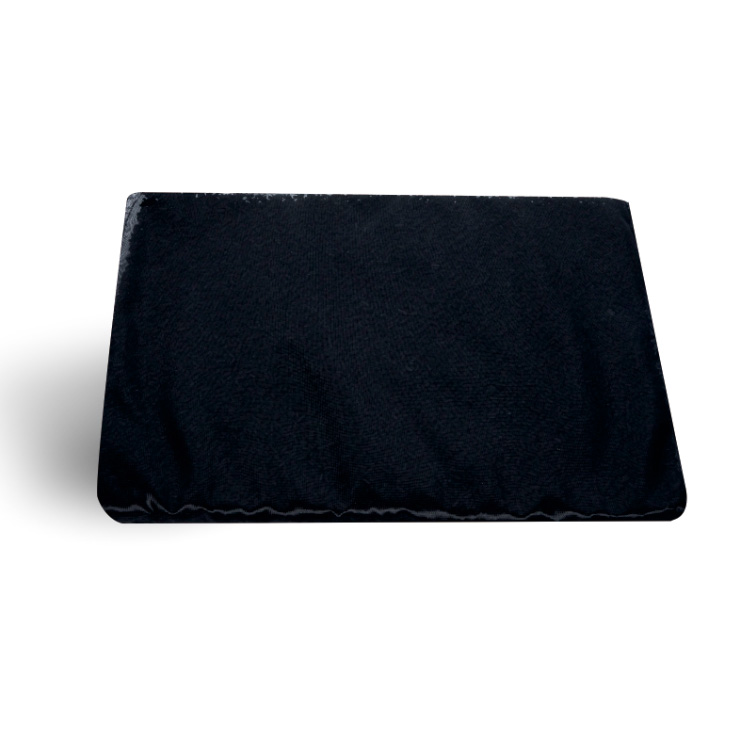
Oltaven's activated carbon filter mesh (adhesive carbon type) is a finished filter that uses high-iodine-value activated carbon granules bonded to an eco-friendly substrate to remove odors and harmful gases. It targets formaldehyde (HCHO), benzene, ammonia, and other volatile organic compounds (VOCs), making it suitable for air purifiers, range hoods, HVAC systems, and other air-treatment equipment. This page explains how media choice and forming (pleating, framing, sealing) determine the finished filter's efficiency, resistance, and capacity—and how Oltaven delivers a complete, custom-engineered filter rather than just raw media.
Activated carbon is the heart of the filter, but the media alone does not define performance. The type of carbon, its iodine value, and the binding method all influence adsorption capacity. Oltaven uses high-iodine-value activated carbon granules and an environmentally friendly substrate in an adhesive carbon process. This process fixes carbon particles uniformly onto the substrate, creating a stable, porous structure that maximizes contact between the air stream and the carbon surface.
Forming turns this media into a filter that fits a specific device. Depending on the application, the carbon mesh can be pleated to increase surface area, framed with paper, plastic, or metal for structural support, and sealed to prevent air bypass. Each step—pleating, framing, and sealing—affects the final filter's efficiency, pressure drop, and dust-holding capacity. Oltaven manufactures the complete filter, so we control these variables to meet your device's requirements.
Three key factors determine how a finished activated carbon filter performs in real use: media selection, forming design, and sealing integrity. Understanding these principles helps you specify the right filter for your product.
The carbon's iodine value indicates its adsorption capacity—higher values generally mean more porosity and greater ability to capture gases. Oltaven uses high-iodine-value carbon granules, and we can adjust the carbon type and loading to target specific gases such as formaldehyde, ammonia, or sulfur compounds. The substrate also matters: it must be compatible with the adhesive and allow air to pass freely.
Pleating increases the surface area of the filter without increasing its footprint. More surface area allows more carbon to be exposed to the air stream, which can improve efficiency and capacity. However, pleating also affects resistance: deeper pleats or tighter folds can increase pressure drop. Oltaven optimizes pleat geometry to balance efficiency and energy consumption.
The frame provides mechanical strength and ensures the filter holds its shape under airflow. Oltaven offers paper, plastic, and metal frames, each with different rigidity and temperature resistance. The frame also influences how the filter seals against the device housing. A well-designed frame minimizes air leakage and ensures that all air passes through the carbon media.
Sealing is critical: even a small gap between the filter and its housing allows unfiltered air to bypass the carbon, reducing overall efficiency. Oltaven applies precise sealing techniques during assembly to create a tight fit. The sealing method is tailored to the frame material and the device's mounting mechanism, ensuring consistent performance.
Resistance (pressure drop) and capacity (how much gas the filter can adsorb before breakthrough) are interrelated. Higher carbon loading and denser media increase capacity but may also raise resistance, which can strain fans and increase energy use. Oltaven engineers each filter to achieve the right balance for its intended application, using low-resistance designs where energy efficiency is paramount and higher-capacity designs where longevity is key.
Oltaven's adhesive carbon filters are used in a wide range of air-treatment devices. In air purifiers, they remove odors and VOCs from indoor air. In range hoods and integrated stoves, they capture cooking fumes and grease vapors. In HVAC systems and fresh air units, they improve indoor air quality by adsorbing pollutants. They are also found in car air filters, vacuum cleaners, and even cat litter boxes, where odor control is essential. Because we customize size, shape, carbon type, and frame, the filter can be adapted to almost any device that requires gas-phase filtration.
| Item | Detail |
|---|---|
| Material | High-iodine-value activated carbon granules + eco-friendly substrate (adhesive carbon process) |
| Dimensions | Customizable (various sizes, shapes, and frame materials) |
| Core performance | Efficient removal of formaldehyde (HCHO), benzene, ammonia, and other VOCs and odors |
| Applications | Household/commercial air purifiers, fresh air systems, car air filters, central air conditioning, vacuum cleaner filters, etc. |
| Manufacturer | Zhongshan Oltaven Products Co., Ltd. (Oltaven) |
Oltaven specializes in OEM/ODM filter manufacturing and has developed more than 1,000 filtration solutions for clients worldwide. Our production base covers 50,000 m², including six cleanrooms totaling 20,000 m², which help control contamination during assembly. We operate a CNAS-accredited laboratory that can test filtration efficiency, dust-holding capacity, and resistance, and we are certified to IATF 16949 (2024) and ISO 9001, ISO 14001, and ISO 45001. Our products comply with REACH and RoHS, and we can provide supporting documentation. With over 20 years of experience, we continue to export to Europe, the US, Japan, and Korea.
Ready to discuss your filter requirements? Contact Oltaven with your device or vehicle model, required size or drawing, airflow or water flow (if applicable), operating conditions, and estimated quantity. Our team will respond with a tailored proposal. Visit our contact page to get started.
Resistance depends on the carbon type, loading, pleat design, and sealing method, not just size. A filter with denser carbon or tighter pleats may have higher resistance, affecting airflow and energy use. Oltaven optimizes these factors to balance efficiency and pressure drop for your specific application.
The adhesive carbon process fixes carbon granules uniformly onto the substrate, creating a porous structure with high surface area for adsorption. This uniform distribution maximizes contact between air and carbon, leading to efficient removal of gases like formaldehyde and VOCs. Oltaven's process ensures consistent performance across the filter.
Yes, Oltaven specializes in OEM/ODM projects. We customize dimensions, shapes (square, circular, honeycomb, pleated), carbon type and loading, frame material, and packaging. Provide your device model and requirements, and our engineers will design a filter that fits perfectly.
Standard products typically have an MOQ of 1,000–3,000 pieces, while custom filters usually require 3,000–5,000 pieces. Lead time for standard items is 7–15 days; custom orders take 25–35 days after sample approval. Sampling takes 7–10 working days.
Replacement depends on the environment and usage. In typical household use (8 hours/day), we recommend replacing every 6–8 months; in commercial high-load settings, every 3–6 months. Oltaven can provide accelerated aging tests and breakthrough curves to help you set a replacement schedule.
Yes, we offer free samples for standard specifications (you cover shipping). For custom samples, a development fee applies, which is refundable upon mass production. Samples come with CNAS lab test reports including adsorption efficiency, resistance, and structural parameters.
Start by contacting us with your device model, size or drawing, airflow, operating conditions, and quantity. We'll review and propose a filter design, then provide a quotation. After your approval, we proceed to sampling and production. Visit our contact page to begin.
Oltaven is certified to IATF 16949 (2024) and ISO 9001, ISO 14001, and ISO 45001. Our products comply with REACH and RoHS, and our CNAS-accredited lab provides test reports. We support customers in meeting regulatory requirements for their markets.