
AR
اتصل بنا The Oltaven washable activated carbon odor filter is a composite carbon fabric filter designed to remove cooking odors and harmful gases such as formaldehyde, benzene, and ammonia while…
FILTER MEDIA / ROLLS · SHEETS · DIE-CUT
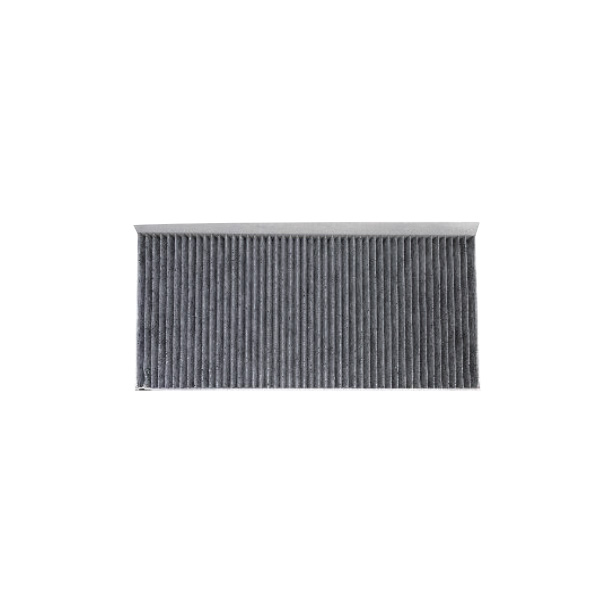
The Oltaven washable activated carbon odor filter is a composite carbon fabric filter designed to remove cooking odors and harmful gases such as formaldehyde, benzene, and ammonia while also capturing larger particles like hair and dust. It is intended for range hoods, integrated stoves, air purifier pre-filters, fresh air systems, car cabin filters, central air return grilles, and industrial vacuum cleaners. The filter combines a polyurethane sponge base with specially cured activated carbon powder or fine granules, and its washable design helps reduce replacement costs.
Activated carbon has a high surface area, but its performance in a finished filter depends on how the carbon is held in place and how air flows through the structure. In this product, fine carbon particles are fixed onto a polyurethane sponge using a special curing process, creating a composite carbon fabric. The sponge provides a flexible, open structure with low airflow resistance, while the carbon provides adsorption sites for odor molecules.
Pleating, framing, and sealing—when used—determine how the finished filter performs in a device. Pleating increases surface area within a given footprint, which can raise capacity and lower resistance. Framing provides mechanical support and ensures a proper fit in the housing, preventing air bypass. Sealing closes the edges so that air passes through the filter medium rather than around it. Oltaven sells finished filters, not just media, so we control these forming steps to deliver consistent efficiency, resistance, and capacity in every batch.
Three main factors decide the finished filter’s efficiency, resistance, and capacity: media choice, forming, and sealing. The media choice—here, the type and amount of activated carbon and the sponge’s pore structure—sets the baseline adsorption capacity and initial resistance. A higher carbon loading generally increases odor removal capacity but may raise resistance if the airflow path becomes restricted.
Forming, such as cutting or stamping to the required shape and thickness, affects how well the filter fits the device and how evenly air flows through it. The sponge’s flexibility allows it to be cut into complex shapes for irregular spaces, which is important for OEM projects. Sealing, when a frame is used, prevents unfiltered air from bypassing the medium. Oltaven offers options such as aluminum frames, plastic frames, or frameless designs to match different housings.
The result is a filter that delivers both primary particle filtration and gas-phase adsorption. The initial odor removal efficiency can reach over 85% for typical cooking odors such as hydrogen sulfide, ammonia, and volatile cooking fumes. Because the carbon is physically adsorbed, the efficiency will decline over time, but the filter can be washed with warm water and mild detergent to restore airflow and remove surface grease, extending its service life.
This washable activated carbon filter is used as a pre-filter layer in air purifiers, where it captures large particles and reduces odors before the main filter. In fresh air ventilation systems, it serves as a pre-filter to protect downstream filters and improve indoor air quality. It is also used in car cabin air filters, central air return grilles, and industrial vacuum cleaners, where odor control and particle capture are needed.
For range hoods and integrated stoves, the filter helps reduce cooking odors released into the kitchen or outdoors. Its flexible sponge base allows it to be adapted to different hood designs, and the washable feature means homeowners can clean it periodically rather than replacing it frequently. Oltaven supplies this filter in various thicknesses, pore densities, and shapes to match specific appliance models.
| Item | Detail |
|---|---|
| Product name | Washable Activated Carbon Sponge Filter |
| Core base material | Polyurethane sponge |
| Adsorption material | Premium powdered or fine granular activated carbon, cured by a special process |
| Filtration performance | Primary filtration of large particles (hair, dust) plus adsorption of formaldehyde (HCHO), benzene, ammonia, and other harmful gases |
| Physical structure advantages | Washable and reusable, very low airflow resistance, flexible and easy to cut, excellent air permeability |
| Main end-use applications | Air purifier pre-filter layer, fresh air system pre-filter, car cabin filter, central air return grille, industrial vacuum cleaner |
| Custom sizes and specifications | Full OEM/ODM flexibility: thicknesses such as 3 mm to 50 mm, pore density (PPI), and stamped shapes |
| Quality certification | Produced in 20,000 m² cleanrooms; company certified to ISO 9001/14001 and IATF 16949 |
Oltaven brings over 20 years of filter development and manufacturing experience to every project. We have developed more than 1,000 filter solutions for customers worldwide, and our OEM/ODM capability allows us to tailor size, structure, media grade, frame material, logo, and packaging to your requirements. Our production base covers 50,000 m², including six cleanrooms totaling 20,000 m², where this washable activated carbon filter is made.
Our in-house laboratory is CNAS-accredited and can issue test reports for filtration efficiency, dust holding capacity, and resistance. The company holds IATF 16949 (obtained in 2024), ISO 9001, ISO 14001, and ISO 45001 certifications, and our products comply with REACH and RoHS environmental regulations, with compliance documents available. Multiple automated production lines support a monthly capacity of millions of pieces, and IQC, IPQC, and OQC controls run throughout the process.
To receive a tailored quote, please provide your device or vehicle model, the required size or a drawing, the airflow or water flow, operating conditions, and your estimated quantity. You can reach our team through the contact page to discuss your project. We welcome OEM and ODM partnerships and will respond with a proposal that fits your application.
Resistance depends on media choice and forming. A filter with a more open sponge structure or a different carbon loading will have different airflow resistance even if the outer dimensions are identical. Pleating and sealing also affect how air moves through the filter, so two same-size filters can perform differently.
An OEM project starts with your inquiry, including device or vehicle model, required size or drawing, airflow or water flow, operating conditions, and estimated quantity. We then evaluate the request, recommend specifications, and produce samples for your approval before quoting and production.
The initial odor removal efficiency can reach over 85% for typical cooking odors such as hydrogen sulfide, ammonia, and volatile cooking fumes. Efficiency will decline over time as the carbon adsorbs pollutants, but washing can restore airflow and extend service life.
Yes, the filter is washable with warm water and mild detergent. Washing removes surface grease and restores airflow, but the carbon’s adsorption capacity will gradually decrease with use, so periodic replacement is recommended based on odor removal performance.
Yes, we offer full OEM/ODM customization. We can produce thicknesses from 3 mm to 50 mm, various pore densities (PPI), and custom shapes using stamping or cutting. Frame options include aluminum, plastic, or frameless designs.
Standard specifications typically have an MOQ of 1,000–3,000 pieces, while custom OEM products generally start at 5,000 pieces. Lead time is 25–35 days for regular orders, and large or custom projects can be scheduled based on production capacity.
Yes, we provide standard samples free of charge (freight collect). Custom samples are quoted based on specifications, with a sampling time of 7–15 days. Samples can include CNAS test reports for performance verification.
Under normal household use, we recommend a service life of 6–12 months. The washable design allows you to restore partial performance by cleaning, but replacement is advised when odor removal efficiency drops noticeably.