
AR
اتصل بنا This washable activated carbon odor filter is a finished filter made by bonding activated carbon onto a flexible polyurethane sponge. It captures coarse particles such as hair and dust…
FILTER MEDIA / ROLLS · SHEETS · DIE-CUT
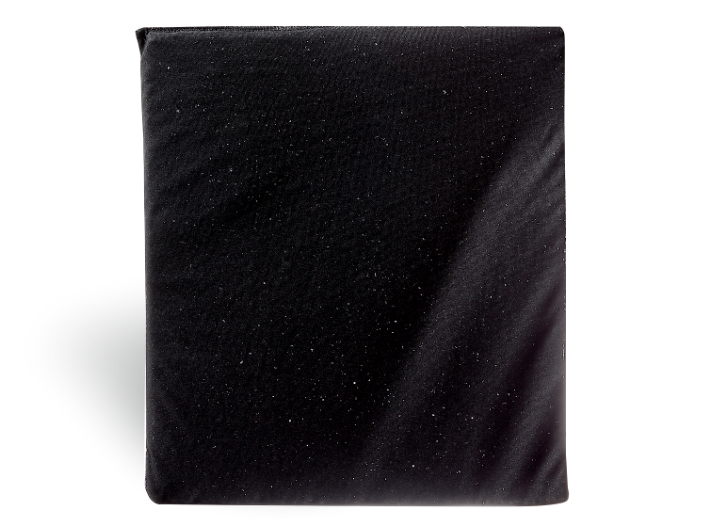
This washable activated carbon odor filter is a finished filter made by bonding activated carbon onto a flexible polyurethane sponge. It captures coarse particles such as hair and dust while adsorbing formaldehyde, benzene, ammonia and other odorous gases. It is designed for air purifier pre-filters, fresh air systems, car cabin filters, central air return grilles and industrial vacuum cleaners, and it is available from Oltaven as a customizable OEM/ODM product.
Activated carbon has a huge internal surface area, but loose powder or granules cannot be used directly in an appliance. The media must be fixed in place so air passes through it evenly and the carbon stays put during handling, installation and washing. That is the role of the finished filter: it turns carbon into a stable, mountable part with predictable airflow and service life.
Oltaven bonds selected activated carbon onto a polyurethane sponge base. The sponge gives the filter its shape and flexibility; the carbon provides the adsorption. The bonding process must keep the carbon exposed to the air stream while preventing it from rubbing off. A filter that sheds carbon loses capacity quickly; one with blocked pores creates too much resistance. The finished product balances these two risks.
Because the carbon is bonded rather than simply enclosed, the filter can be rinsed and reused. Water flows through the open sponge structure and carries away captured dust, leaving the bonded carbon in place. This washable design reduces the cost of replacement compared with single-use filters. The same construction also acts as a pre-filter, protecting downstream filter stages from coarse debris.
Three factors determine how a finished carbon filter performs: the carbon itself, the way it is bonded, and the physical form of the filter.
Carbon selection. The grade and loading of activated carbon set the adsorption capacity for gases such as formaldehyde, benzene and ammonia. Higher carbon loading generally means more capacity, but it can also increase resistance if the carbon fills the open pores of the sponge. The right balance depends on the target gas and the allowable pressure drop.
Bonding quality. The adhesive must hold carbon particles securely without sealing their pores. If the bond is too weak, carbon dust migrates into the air stream and the filter loses capacity. If the bond is too heavy, it coats the carbon and reduces adsorption. Oltaven controls this step so that the finished filter keeps its carbon through repeated washing.
Forming and dimensions. Thickness, pore density and overall size affect both airflow and contact time. A thicker filter or a finer pore structure gives more contact time for adsorption but raises resistance. The filter can be die-cut into circles, squares or custom shapes to fit specific housings. Edge quality matters: clean cuts prevent loose carbon at the edges and ensure a proper fit.
Together, these choices explain why two filters of the same size can behave differently. A filter with well-exposed carbon and an open structure will have lower resistance and higher usable capacity than one where the carbon is overcrowded or the pores are blocked. The finished filter, not the raw media alone, is what determines real-world efficiency, resistance and capacity.
The washable activated carbon odor filter is used where both coarse dust and odorous gases need to be handled in a thin, flexible layer. Typical installations include:
In each case, the filter can be washed and reused, which suits applications where regular replacement would be costly or inconvenient.
| Item | Detail |
|---|---|
| Product name | Washable Activated Carbon Filter (Sponge Type) / Washable Activated Carbon Sponge Filter |
| Base material | Polyurethane sponge |
| Adsorbent | Selected powdered or fine granular activated carbon, fixed by a special curing process |
| Core functions | Primary filtration of large particles (hair, dust) plus adsorption of formaldehyde (HCHO), benzene, ammonia and other harmful gases |
| Physical advantages | Washable and reusable, very low airflow resistance, flexible and easy to cut, good air permeability |
| Typical end uses | Air purifier pre-filter layer, fresh air system pre-filter, car cabin filter, central air return grille, industrial vacuum cleaner |
| Customization | OEM/ODM supported. Thickness from 3 mm to 50 mm, various pore densities (PPI) and outer dimensions, with die-cut forming |
| Quality system | Produced in 20,000 m² cleanrooms; company certified to ISO 9001, ISO 14001 and IATF 16949 |
Oltaven has more than 20 years of experience in filter development and manufacturing, with over 1,000 filter solutions developed for customers. Our 50,000 m² plant includes six cleanrooms covering 20,000 m², and our in-house laboratory is CNAS-accredited and can issue test reports for filtration efficiency, dust holding capacity and resistance. We are certified to IATF 16949 (2024), ISO 9001, ISO 14001 and ISO 45001, and our products meet REACH and RoHS requirements with compliance documents available. We have exported to Europe, the United States, Japan and South Korea for more than 20 years.
To quote accurately, please tell us your device or vehicle model, the required size or a drawing, the airflow or water flow, the operating conditions (temperature, humidity, gas type) and your estimated quantity. We will respond with a specification and sample plan. Contact Oltaven to start the conversation.
Resistance depends on how openly air can pass through the carbon layer. If the carbon is overcrowded or the bonding adhesive blocks the sponge pores, resistance rises. Oltaven controls carbon loading and bonding so the finished filter keeps low resistance while maintaining adsorption capacity.
It starts with your requirements: device model, target size or drawing, airflow, operating conditions and quantity. We review feasibility, propose a specification, and provide samples for validation before production. The full workflow is listed above.
The filter is designed for primary filtration of coarse particles and adsorption of odorous gases such as formaldehyde, benzene and ammonia. Efficiency depends on carbon grade, loading and airflow; our CNAS laboratory can test efficiency and resistance for your specific configuration.
Yes. We offer thickness from 3 mm to 50 mm, various pore densities (PPI) and die-cut shapes including circles, squares and custom outlines. Please provide a drawing or sample for an accurate quotation.
Standard samples are typically free (you cover international courier cost); custom samples may incur a tooling or sampling fee, which is often credited against a bulk order. Quotations are prepared after we receive your specifications and quantity.
Standard specifications typically have an MOQ of 1,000–2,000 pieces; custom products may require 3,000–5,000 pieces depending on tooling. Standard stock ships in 3–7 days; custom orders typically ship in 25–35 days after sample approval.
The filter is washable and reusable. Replacement depends on operating conditions and washing frequency; under normal use, the carbon capacity will gradually decline. We recommend monitoring odor breakthrough and replacing when performance drops.
Yes. We can select carbon grade and loading, and customize packaging with your logo. As an OEM/ODM partner with over 1,000 filter solutions developed, we can match the filter to your specific gas-removal and fit requirements.