
AR
اتصل بنا Oltaven's plate type activated carbon cloth filter is a finished air filter that combines a high-iodine honeycomb activated carbon layer with a formaldehyde-removal catalyst composite to…
FILTER MEDIA / ROLLS · SHEETS · DIE-CUT
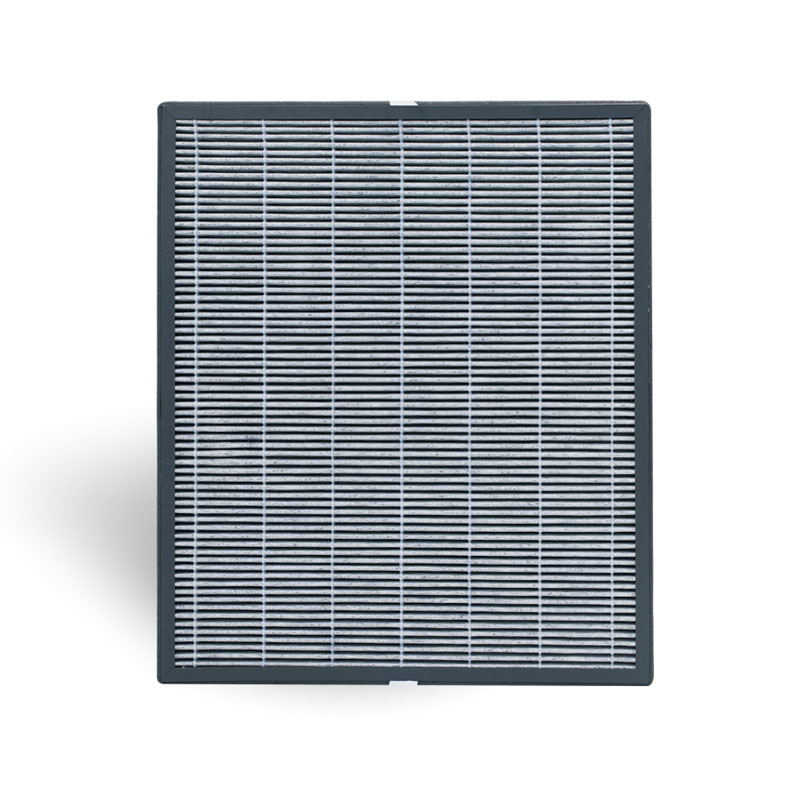
Oltaven's plate type activated carbon cloth filter is a finished air filter that combines a high-iodine honeycomb activated carbon layer with a formaldehyde-removal catalyst composite to adsorb and break down harmful gases. It targets formaldehyde, benzene-series compounds and TVOC in residential and commercial air purifiers, fresh-air systems and vehicle cabins. It is built for appliance makers, HVAC suppliers and industrial odour-control teams that need a ready-to-install filter rather than raw media. Oltaven manufactures the finished filter in Zhongshan, Guangdong, China, and supports OEM/ODM customisation.
Media choice sets the ceiling on what a filter can do. Activated carbon with a high iodine number offers more micropore surface for gas adsorption, and the honeycomb form keeps that surface accessible at normal airflow. Adding a formaldehyde-removal catalyst composite supports catalytic breakdown of formaldehyde rather than storage alone. But the media alone is not the product. Pleating or flat lamination, the frame that holds the media, and the sealing that forces air through the media instead of around it decide how much of that potential reaches the installed filter.
In a plate type filter, the carbon cloth or carbon block sits in a flat panel. The forming steps — cutting the media to size, bonding it into the frame, and sealing the perimeter — determine the effective filtration area, the pressure drop at a given airflow, and how evenly air passes through the carbon layer. A well-formed panel uses the full media area; a poorly sealed one lets air bypass the carbon, so odour and gas removal drop even though the media itself is unchanged. Oltaven sells finished filters, so these forming decisions are part of the product, not left to the buyer.
Three forming factors decide the finished filter's efficiency, resistance and capacity. First, the amount and type of carbon: higher carbon weight and a suitable carbon type raise capacity for target gases, and the catalyst composite supports formaldehyde decomposition. Second, the media form: flat lamination, honeycomb filling or a sintered carbon block each changes how air contacts the carbon, which in turn changes resistance and service life. Third, the frame and seal: the frame holds the panel's shape under airflow, and the seal prevents bypass, so the rated gas removal is actually achieved in the device.
The result is that two filters of the same outer size can behave differently. One may have more carbon or a different carbon form, or a tighter perimeter seal, giving lower resistance or longer capacity for a given gas. Oltaven's CNAS-accredited laboratory can test filtration efficiency, dust holding capacity and resistance on finished filters, so these forming choices can be checked against the intended application.
The plate type activated carbon cloth filter is used in household air purifiers, fresh-air system pre-filters and high-efficiency stages, and vehicle air-conditioning filter elements. In commercial and industrial settings it serves hospital cleanrooms, industrial exhaust treatment and odour-removal equipment. The panel format suits devices with flat filter slots, and Oltaven supports special-shape customisation where the housing requires it. Because the filter is finished, appliance makers can specify the panel size, carbon form and frame to fit an existing product line.
| Item | Detail |
|---|---|
| Core construction materials | High-iodine honeycomb activated carbon; proprietary formaldehyde-removal catalyst composite |
| Main performance | Efficient adsorption and catalytic decomposition of harmful gases such as formaldehyde (HCHO), benzene-series compounds and TVOC |
| Structural options | Flat laminated type, honeycomb-filled type, sintered carbon block (special-shape customisation supported) |
| Core applications | Household: air purifiers, fresh-air system pre-filters and high-efficiency filtration, vehicle air-conditioning filter elements. Commercial/industrial: hospital cleanrooms, industrial exhaust treatment, odour-removal equipment |
| Quality and certification | CNAS laboratory tested; complies with RoHS; factory IATF 16949 certified |
Oltaven is an OEM/ODM filter manufacturer with more than 20 years of development and manufacturing experience and over 1,000 developed filtration solutions. That background matters when a finished filter must match a device's airflow, size and service life rather than simply supply media. The production base covers 50,000 m², including six cleanrooms totalling 20,000 m², and multiple automated production lines support output in the millions of pieces per month. A self-built CNAS-accredited laboratory can issue test reports for filtration efficiency, dust holding capacity and resistance. The factory holds IATF 16949 automotive quality management certification (obtained in 2024) and ISO 9001, ISO 14001 and ISO 45001 system certifications. Products comply with REACH and RoHS environmental regulations, and compliance documents can be provided. Quality control runs through IQC, IPQC and OQC. The company is located in Zhongshan, Guangdong, China, and has exported to Europe, the United States, Japan and South Korea for more than 20 years.
To quote a finished plate type activated carbon cloth filter, Oltaven needs your device or vehicle model, the required size or a drawing, the airflow or operating conditions, and the order quantity. If you are unsure which carbon form or frame suits your application, share the target gases and the housing dimensions and the team will recommend a configuration. Contact Oltaven to start an OEM/ODM project or request samples.
Resistance depends on how the finished filter is formed, not only on outer dimensions. Carbon form (flat lamination, honeycomb filling or sintered carbon block), carbon weight and the tightness of the frame and seal all change how air passes through the media. A panel with more open carbon structure or a tighter perimeter seal can show lower resistance at the same airflow. Oltaven can test resistance on finished filters in its CNAS-accredited laboratory.
An OEM project starts with your device or vehicle model, the required panel size or drawing, and the target airflow or operating conditions. Oltaven reviews the carbon form, frame and sealing options, then produces samples for evaluation. Standard samples are typically sent within 3 working days, while custom samples take 7–15 days. After sample approval, quantity, packaging and delivery are confirmed.
The plate type activated carbon cloth filter is designed for efficient adsorption and catalytic decomposition of formaldehyde, benzene-series compounds and TVOC. Typical removal rates can reach above 85% depending on gas type and airflow, as noted in Oltaven's product data. Because efficiency varies with the target gas and operating conditions, Oltaven can test finished filters in its CNAS-accredited laboratory to confirm performance for a specific application.
Yes. Oltaven supports OEM/ODM customisation of size, structure, carbon type and weight, frame material, logo and packaging for the plate type activated carbon cloth filter. Structural options include flat laminated, honeycomb-filled and sintered carbon block forms, and special shapes can be produced. The team works from your drawing or sample to match the finished filter to your device.
Standard specifications typically have an MOQ of 500–1,000 pieces, while customised products are negotiated based on tooling and material requirements. Samples can be provided free of charge for formal customers, with freight paid by the customer; standard samples usually ship within 3 working days and custom samples take 7–15 days. Regular orders take 15–25 days, and large orders generally take 30–45 days.
Under normal operating conditions, the plate type activated carbon cloth filter has a service life of 6–12 months, adjusted according to air pollution concentration and usage frequency. Higher pollutant levels or continuous operation may shorten this interval. Oltaven can advise on replacement timing based on the target gases and airflow of your application.
Oltaven holds ISO 9001, ISO 14001 and ISO 45001 system certifications and obtained IATF 16949 automotive quality management certification in 2024. The plate type activated carbon cloth filter is CNAS laboratory tested and complies with RoHS, and Oltaven can provide REACH and RoHS compliance documents. These support export to Europe, the United States, Japan and South Korea, where Oltaven has shipped for more than 20 years.
To receive a quote, share your device or vehicle model, the required size or drawing, the airflow or water flow, operating conditions and estimated quantity. Oltaven's team will review the specification and recommend a finished filter configuration. <a href="/en/contact">Contact Oltaven</a> to start the conversation or request samples.