
AR
اتصل بنا This Oltaven coffee machine water filter is a compatible replacement cartridge for KEURIG brewers that combines coconut-shell activated carbon with food-grade ion exchange resin to reduce…
FILTER MEDIA / ROLLS · SHEETS · DIE-CUT
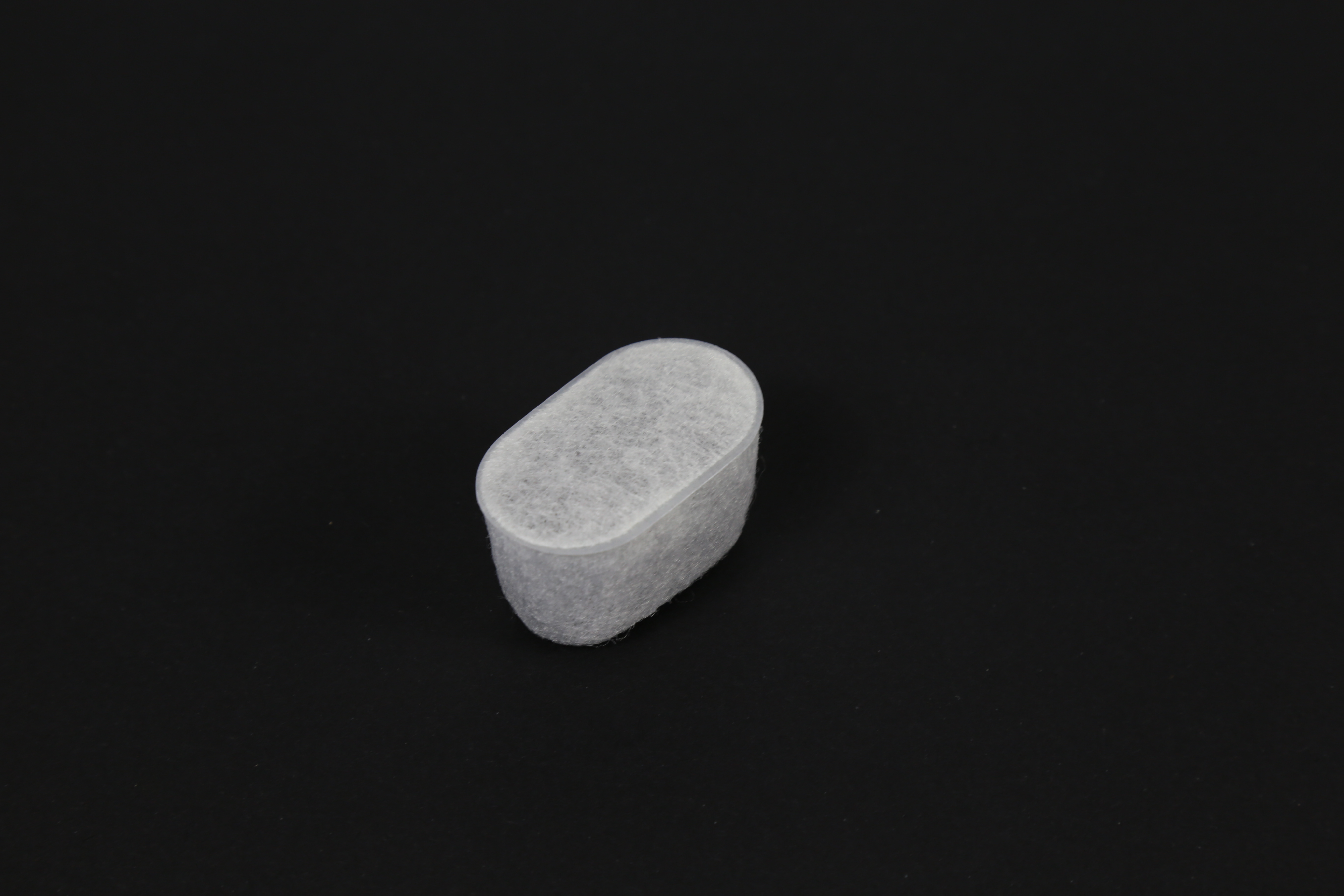
This Oltaven coffee machine water filter is a compatible replacement cartridge for KEURIG brewers that combines coconut-shell activated carbon with food-grade ion exchange resin to reduce chlorine, off-tastes, scale-forming hardness and coarse particles before water reaches the brew path. It suits home and office KEURIG users, coffee service operators and OEM buyers who want a finished filter rather than loose media. Oltaven builds the complete cartridge — media, forming, sealing and packaging — in Zhongshan, Guangdong, China.
A filter is not a bag of carbon. The same activated carbon can deliver different results depending on how it is packed, how the water is made to pass through it and how the cartridge is closed. In a coffee machine, water contacts the filter for only a short time, so the way the media is formed and sealed decides whether the carbon and resin get a fair chance to work.
Oltaven starts with selected coconut-shell activated carbon for chlorine and organic odour reduction, and food-grade ion exchange resin for hardness and scale control. The two materials are combined in a fixed bed inside the cartridge so that water passes through the carbon and resin in sequence. The housing is then assembled and sealed so that water follows the intended path instead of bypassing the media. This is the step where a finished filter is made: the cartridge determines contact time, pressure drop and how much water the media can treat before exhaustion.
Because Oltaven sells finished filters rather than media alone, every change in media grade, fill weight or internal geometry is evaluated as a complete unit. That is why a filter that looks the same size as another can behave differently in service.
Media choice and blend ratio. Coconut-shell carbon is chosen for its pore structure and low fines, while the resin handles hardness. The ratio between them is set for the water quality the filter is intended to serve. A blend tuned for soft municipal water will not behave the same on harder supply, so the mix is part of the specification, not an afterthought.
Pleating and packing. Where carbon is used in a formed block or pleated composite, the forming process fixes the surface area available to the water and the path length through the media. Tighter packing can raise efficiency but also raises resistance; looser packing lowers resistance but may shorten effective life. Oltaven balances these trade-offs during development so that the cartridge meets its flow and capacity targets together.
Framing and sealing. The frame holds the media in place and the seal keeps water from short-circuiting around it. A poor seal lets untreated water reach the brewer, which shows up as taste problems and scale even when the media itself is good. Sealing also affects mechanical strength during handling and insertion.
The installed system. Operating pressure and temperature matter. This filter is rated for 20–120 psi (about 1.4–8.3 bar) and 2°C–38°C, cold water only. Within that window, higher pressure generally means higher flow but can shorten contact time, while very low pressure may reduce throughput. The cartridge is designed to work across the rated range, but the actual resistance and capacity a user sees depend on their water, pressure and usage pattern.
This cartridge is intended for automatic coffee machines, semi-automatic espresso machines and commercial coffee equipment where scale control supports consistent extraction. In commercial settings, softer water helps protect heating elements and reduces descaling downtime. The same finished-filter approach is used for OEM water filter programmes, where a buyer may need a different housing, connection or media blend for another coffee platform.
The filter is not limited to one brewer style. Because Oltaven controls media, forming and sealing in-house, the cartridge can be adapted for other coffee machine water filter applications while keeping the same principle: match the media to the water, then form and seal the cartridge so the media is used effectively.
| Item | Detail |
|---|---|
| Filtration media | Coconut-shell activated carbon and food-grade ion exchange resin |
| Particle retention | Fine pore structure intercepts larger impurities such as sediment and rust |
| Filter life | About 250 litres or 2–3 months, depending on local water quality and usage frequency |
| Operating pressure | 20–120 psi (approximately 1.4–8.3 bar) |
| Operating temperature | 2°C–38°C, cold water filtration only |
| Applications | Automatic coffee machines, semi-automatic espresso machines, commercial coffee machine water softening, OEM water filter customisation |
| Quality systems | Production follows ISO 9001/14001, IATF 16949, medical supplies GMP standard; CNAS national-level testing certification |
Oltaven is an OEM/ODM filter manufacturer with more than 20 years of development and manufacturing experience and over 1,000 filtration solutions developed for customers. The plant covers 50,000 m² in Zhongshan, Guangdong, China, including six cleanrooms totalling 20,000 m² where water-contact products are assembled in a controlled environment.
The in-house laboratory is CNAS-accredited and can issue test reports on filtration efficiency, dust holding capacity and resistance. The company holds ISO 9001, ISO 14001 and ISO 45001 system certifications and was awarded IATF 16949 automotive quality management certification in 2024. Products comply with REACH and RoHS environmental requirements, and compliance documents can be supplied. Quality control follows IQC, IPQC and OQC stages, and multiple automated production lines support monthly capacity in the millions of pieces.
To move from concept to a finished filter, Oltaven needs a few practical details: the device or vehicle model, the required size or a drawing, the expected water flow, the operating conditions (pressure, temperature and water quality), and the quantity you plan to order. With those inputs, the team can recommend a media blend, propose a forming and sealing approach and prepare a quotation.
Whether you need a compatible KEURIG replacement or a private-label cartridge for another coffee platform, Oltaven welcomes long-term OEM/ODM partnerships. Contact us to start the conversation.
Resistance depends on how tightly the media is packed, the path length through the carbon and resin, and the internal geometry of the cartridge. Two filters can share the same external dimensions but use different fill weights or forming methods, so water sees a different flow path. Oltaven balances media packing and forming during development to meet both flow and capacity targets within the rated 20–120 psi range.
An OEM project starts with the device or vehicle model, the required size or drawing, and the expected water flow and operating conditions. Oltaven reviews these inputs, proposes a media blend and cartridge construction, and builds samples for fit and performance checks. Standard samples can ship in 3–5 working days, while custom samples typically take 7–15 working days.
Standard compatible models have an MOQ of 5,000 pieces, with stock or small batch orders usually delivered in 15–20 days. OEM customised versions are recommended from 10,000 pieces, with a production cycle of about 25–30 days including tooling and packaging development. Lead times are confirmed against the final specification.
Yes. Standard stock samples can be sent within 3–5 working days for fit and performance testing, and custom samples with your logo or specification usually take 7–15 working days. CNAS laboratory test data can accompany the samples to support your internal evaluation.
The recommended replacement interval is about 2–3 months or 250 litres, whichever comes first, depending on local water quality and usage frequency. Harder water or heavier use will exhaust the ion exchange resin sooner, so the cartridge should be changed when taste changes or scale reappears.
Oltaven’s production follows ISO 9001, ISO 14001, IATF 16949 and medical supplies GMP standards, and the in-house laboratory is CNAS-accredited. Products comply with REACH and RoHS requirements, and compliance documents can be provided. These systems cover the finished cartridge, not only the raw media.
Yes. The ratio of coconut-shell activated carbon to ion exchange resin can be adjusted for different water conditions, and the cartridge construction can be adapted to other coffee machine platforms. Because Oltaven sells finished filters, the blend, forming and sealing are developed together so the cartridge performs as a unit.
Send the device or vehicle model, required size or drawing, water flow, operating conditions and planned quantity through the contact page. Oltaven will review the application and respond with a media recommendation, forming proposal and quotation. <a href="/en/contact">Contact us</a> to begin.