
AR
اتصل بنا Oltaven's American range hood filter combines a multi-layer aluminum foil maze, flame-retardant polyester fiber and a high-iodine activated carbon layer to trap heavy cooking grease and…
FILTER MEDIA / ROLLS · SHEETS · DIE-CUT
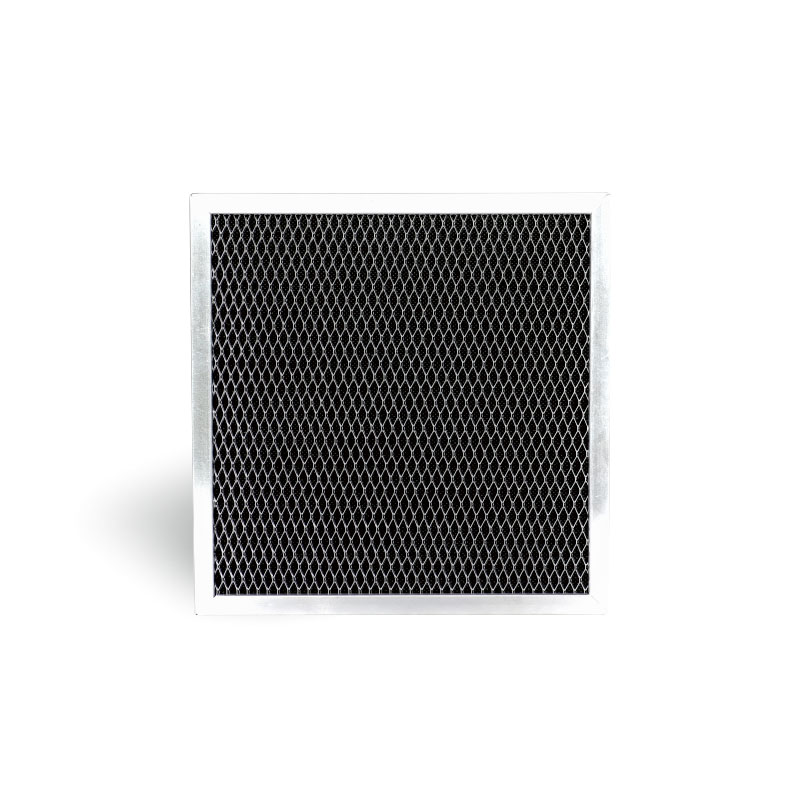
Oltaven's American range hood filter combines a multi-layer aluminum foil maze, flame-retardant polyester fiber and a high-iodine activated carbon layer to trap heavy cooking grease and adsorb odors in ducted and ductless kitchen hoods. It is designed for American-style range hoods, recirculating systems, kitchen exhaust fans and commercial grease removal equipment. The finished filter is built to your cabinet dimensions, airflow direction and mounting hardware, and it carries UL 900 Class 1 / Class 2 flame-resistance compliance.
A range hood filter is not just a sheet of aluminum. The base materials — aluminum foil, polyester fiber and activated carbon — each do a specific job, but the finished performance depends on how they are combined and formed. Oltaven sells finished filters, not loose media, because pleating, stacking, framing and sealing decide how much grease the filter holds, how hard the fan has to work and how long the filter lasts before cleaning or replacement.
The aluminum foil is expanded and stacked into a three-dimensional maze. This structure forces grease-laden air to change direction many times, so oil droplets collide with the metal and stay there. The polyester fiber adds a flame-retardant layer that helps the filter resist ignition, and the activated carbon layer adsorbs cooking odors, especially in recirculating hoods where air returns to the kitchen. The way these layers are pleated and bonded determines the open area, the pressure drop and the dust-holding capacity of the final product.
Framing and sealing turn the media stack into a drop-in part. A high-strength aluminum frame holds the layers in shape and fits the hood's filter slot. Handles, plastic or metal clips, and edge seals are selected to match the customer's installation channel. A loose media pack with the same materials can behave very differently once it is framed, because bypass air and compression change the resistance and capture efficiency.
Media choice. The aluminum foil grade and thickness set the strength of the maze walls. The activated carbon's iodine number indicates its adsorption capacity for odors. The polyester fiber's flame-retardant treatment supports UL 900 compliance. Oltaven selects these inputs against the customer's cooking load, hood airflow and cleaning cycle.
Pleating and stacking. The number of foil layers and the pleat geometry control the balance between grease capture and pressure drop. More layers or tighter pleats can raise capture, but they also raise resistance and reduce airflow. The right combination depends on the hood's fan curve and the acceptable noise level. The filter's dust-holding capacity — how much grease it can hold before resistance climbs — is also set at this stage.
Framing and sealing. The aluminum frame must be rigid enough to keep the media pack flat and to survive handling during cleaning. The fit between frame and hood slot matters as much as the media: gaps let greasy air bypass the filter, which lowers overall efficiency. Oltaven customises frame dimensions, handle style and clip type to the customer's drawing, so the finished filter seats correctly and seals the airflow path.
Quality control. Each batch is checked through IQC, IPQC and OQC. The CNAS-accredited laboratory can test filtration efficiency, dust-holding capacity and resistance, so the finished filter's numbers are tied to the actual construction, not only to the media data sheet.
The American Range Hood Carbon Filter is used in American-style range hoods, ductless recirculating range hoods, kitchen exhaust fan systems and commercial kitchen grease removal equipment. In ducted hoods, the aluminum maze protects the motor and fan wheel by intercepting heavy grease before it reaches moving parts. In recirculating hoods, the activated carbon layer adsorbs cooking odors so that air returned to the kitchen is fresher. The same construction can be adapted for commercial catering hoods where grease loading is higher and cleaning intervals are shorter.
Because the filter is a finished part, it can be ordered with the frame size, handle and clip design that match a specific hood model. This makes it suitable for appliance makers, hood assemblers, kitchen equipment distributors and replacement-filter brands that need a consistent drop-in fit.
| Item | Detail |
|---|---|
| Product name | American Range Hood Filter – Activated Carbon Composite |
| Core structure materials | Multi-layer corrugated aluminum foil + flame-retardant polyester fiber + high-efficiency activated carbon layer |
| Core purification functions | Physical interception of heavy grease; protection of motor and fan wheel; strong adsorption of cooking odors |
| Fire safety rating | Complies with UL 900 Class 1 / Class 2 flame-resistance test certification standards |
| Main end applications | American-style range hoods, ductless recirculating range hoods, kitchen exhaust fan systems, commercial kitchen grease removal equipment |
| Frame and clip customisation | High-strength aluminum frame; handle and plastic or metal clip styles selected to match customer installation slots |
| Size and specification customisation | 100% tooled to customer equipment dimensions; length, width, thickness and aluminum foil layer count can be flexibly produced under OEM/ODM |
| Quality certification system | Produced in a 50,000 m² clean plant with a national CNAS laboratory; certified to ISO 9001 / ISO 14001 and IATF 16949 automotive quality system |
Oltaven is an OEM/ODM filter manufacturer with more than 20 years of experience and over 1,000 developed filtration solutions. The 50,000 m² production base includes six cleanrooms totalling 20,000 m², and multiple automated lines support monthly output in the millions of pieces. The in-house laboratory is CNAS-accredited and can issue test reports for filtration efficiency, dust-holding capacity and resistance. The factory holds IATF 16949 (obtained in 2024) and ISO 9001, ISO 14001 and ISO 45001 system certifications. Products comply with REACH and RoHS environmental regulations, and compliance documents are available on request. The company is located in Zhongshan, Guangdong, China, and has exported to Europe, the United States, Japan and South Korea for more than 20 years.
To quote an American range hood filter for your programme, please send the device or vehicle model, the required size or a drawing, the airflow or water flow of the system, the operating conditions (cooking type, temperature, cleaning cycle) and the estimated quantity. Oltaven will respond with a proposed construction, sample plan and commercial terms. Contact our team to begin.
Resistance depends on how the media is formed, not only on the outer dimensions. More aluminum foil layers, tighter pleats or a denser carbon layer increase the airflow path and raise resistance, while a more open structure lowers it. Oltaven balances layer count and pleat geometry against the hood's fan curve so the finished filter meets the required capture without overloading the motor.
An OEM project starts with the hood model, a drawing or a physical sample, plus the target airflow and market requirements. Oltaven reviews the fit and performance targets, proposes a construction, and produces custom samples for evaluation. After validation in the CNAS laboratory, production and packaging are scheduled.
Yes. The filter uses a high-strength aluminum frame, and the handle and plastic or metal clip styles are selected to match your installation slot. Dimensions, foil layer count and thickness are tooled to your equipment, so the finished filter seats correctly and limits bypass air.
The CNAS-accredited laboratory can test filtration efficiency, dust-holding capacity and resistance on finished filters. These tests link the performance numbers to the actual pleating, framing and sealing, not only to the raw media. Oltaven can provide test reports to support your product validation.
MOQ and lead time are confirmed per project based on the customisation level. Oltaven's automated lines support monthly output in the millions of pieces, and the factory plans production after sample approval. Please share your estimated annual volume so we can propose a schedule.
Yes. Standard samples can be supplied for initial testing, and custom samples are made to your drawing for fit and performance checks. Sample fees and shipping terms are confirmed at the inquiry stage, and Oltaven can include CNAS test reports with the samples.
Cleaning and replacement intervals depend on cooking load and hood airflow. In heavy commercial use, the aluminum maze may need cleaning more often, while the activated carbon layer is replaced when odors return. Oltaven can recommend an interval after reviewing your operating conditions.
The filter complies with UL 900 Class 1 / Class 2 flame-resistance test standards. The factory holds IATF 16949 and ISO 9001, ISO 14001 and ISO 45001 certifications, and products meet REACH and RoHS requirements with documents available. Please contact us with your market requirements to confirm the applicable compliance file.