
AR
اتصل بنا Oltaven flat activated carbon filter mesh is a finished filter that removes odors and harmful gases from air. It adsorbs formaldehyde, benzene, ammonia and other volatile organic compounds…
FILTER MEDIA / ROLLS · SHEETS · DIE-CUT
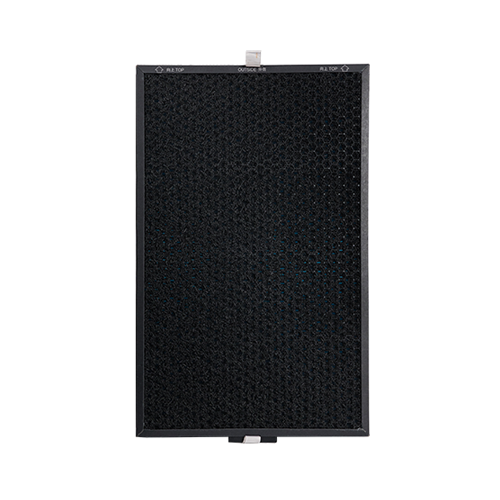
Oltaven flat activated carbon filter mesh is a finished filter that removes odors and harmful gases from air. It adsorbs formaldehyde, benzene, ammonia and other volatile organic compounds (VOCs). It is designed for air purifiers, fresh air systems, vehicle air conditioning and industrial exhaust treatment. Oltaven makes the finished filter, not just the media, so media choice and forming are controlled in-house.
A flat activated carbon filter starts with the adsorbent. Oltaven uses high-performance activated carbon, typically coconut shell or coal based, with an iodine value of 800–1100 mg/g. The carbon is formed into one of several structures: honeycomb activated carbon block (sintered), honeycomb with plastic substrate, honeycomb with corrugated paper, or cylindrical carbon filter. Each form balances surface area, airflow and mechanical strength.
Forming turns the carbon structure into a filter that fits a device. Pleating increases media area within a given face size, which raises capacity and lowers initial resistance. Framing gives the filter a stable shape for installation. Sealing prevents air from bypassing the carbon. Oltaven selects and combines these steps so the finished filter matches the device’s airflow and pressure drop.
Three factors control efficiency, resistance and capacity: the carbon’s adsorption properties, the geometry of the formed media, and the quality of framing and sealing.
Adsorption efficiency depends on the carbon’s iodine value and the contact time between air and carbon. Higher iodine value means more micropores and more sites for gas molecules. Oltaven’s carbon with 800–1100 mg/g iodine value removes over 85% of common odorous gases such as formaldehyde, TVOC, hydrogen sulfide and ammonia under test conditions. Efficiency is measured at the finished filter level, not just the media.
Resistance is decided by media structure and pleat geometry. Honeycomb carbon blocks offer straight channels with lower resistance but less contact area. Pleated carbon media can achieve higher efficiency but may raise resistance if pleats are too tight. Framing and sealing also affect resistance: a well-sealed filter forces air through the carbon, while bypass leaks reduce effective efficiency.
Capacity is the total amount of gas a filter can adsorb before replacement. It depends on carbon mass and media area. Oltaven can adjust carbon loading and filter dimensions to match the target replacement interval. The finished filter is tested in the CNAS-accredited laboratory for efficiency, resistance and capacity, so performance is known before delivery.
Oltaven flat activated carbon filters are used in household and commercial air purifiers, fresh air systems, vehicle air conditioning filters, central air conditioning circulation systems, vacuum cleaner filters and industrial exhaust gas treatment. In each case, the filter is customised to the device’s size, airflow and operating conditions. For air purifiers, the filter targets odors and VOCs; for vehicle cabins, it reduces exhaust smells; for industrial exhaust, it serves as a pre-treatment stage.
| Item | Detail |
|---|---|
| Core material | High-performance activated carbon |
| Structure options | Honeycomb activated carbon block (sintered), honeycomb with plastic substrate, honeycomb with corrugated paper, cylindrical carbon filter |
| Gas removal | Adsorbs and removes formaldehyde, benzene, ammonia and other VOCs |
| Applications | Household and commercial air purifiers, fresh air systems, vehicle air conditioning filters, central air conditioning circulation, vacuum cleaner filters, industrial exhaust treatment |
| Dimensions | Customised to customer equipment parameters and requirements |
Oltaven has over 20 years of experience in filter research, development and manufacturing, and has developed more than 1,000 filtration solutions for OEM and ODM customers. The production base covers 50,000 m², including six cleanrooms totalling 20,000 m². A self-built laboratory is accredited by CNAS and can issue test reports for filtration efficiency, dust holding capacity and resistance. The company holds IATF 16949 (achieved in 2024) and ISO 9001, ISO 14001 and ISO 45001 system certifications. Products comply with REACH and RoHS environmental regulations, with compliance documents available. Oltaven is located in Zhongshan, Guangdong, China.
To receive a tailored quotation, please tell us your device or vehicle model, the required size or a drawing, the airflow or water flow, the operating conditions (temperature, humidity, gas concentration) and the quantity. Contact Oltaven to discuss your filter project.
Resistance depends on media structure and pleat geometry, not just face size. A honeycomb carbon block has straight channels and lower resistance, while tightly pleated carbon media may have higher resistance but more contact area. Framing and sealing also matter: a well-sealed filter forces air through the carbon, while bypass leaks lower effective resistance but reduce efficiency. Oltaven tests each finished design for resistance in its CNAS-accredited laboratory.
An OEM project starts with your requirements: device model, size or drawing, airflow, operating conditions and quantity. Oltaven’s engineering team then proposes a filter structure and carbon loading, and produces samples within 2–4 weeks. After you validate the samples, we confirm specifications, packaging and lead time. Contact us to begin.
Yes. Oltaven offers coconut shell or coal-based activated carbon with iodine values of 800–1100 mg/g, and can adjust carbon loading to meet target efficiency and replacement interval. We also customise structure (honeycomb block, plastic substrate, corrugated paper, cylindrical), frame material and dimensions. Share your performance targets and we will propose a configuration.
Under test conditions, Oltaven’s flat activated carbon filter removes over 85% of common odorous gases such as formaldehyde, TVOC, hydrogen sulfide and ammonia. Efficiency is measured on the finished filter in our CNAS-accredited laboratory. Actual performance in your device depends on airflow, gas concentration and filter size, so we recommend testing a sample.
Standard specifications typically have an MOQ of 500–1,000 pieces. Custom specifications are negotiated based on the design. Standard products ship in 7–15 days; OEM orders usually take 25–35 days for mass production. Large orders can be scheduled to shorten lead time. Contact us with your quantity for a precise quote.
Under standard conditions (moderate indoor air quality, 8 hours daily operation), the filter typically lasts 6–12 months. Actual life depends on airflow, gas concentration, humidity and temperature. Oltaven’s CNAS laboratory can test life under your operating conditions and recommend a replacement interval. We can also adjust carbon loading to extend service life.
Yes. We provide samples for testing. Standard samples are usually free, with the customer covering international courier costs. Custom samples incur a sampling fee, which can be credited against a bulk order. CNAS laboratory test reports can be sent with the sample to support your evaluation. Contact us to request a sample.